

Water is an ingredient in almost everything a restaurant or café serves. It goes into coffee, ice, soups, sauces, drinks and the rinse cycle that leaves glasses spotless. When it causes trouble, customers may notice before you do. Water filtration for restaurants protects taste, equipment and food safety, but only if the system is matched to how your kitchen actually works.
This guide covers the most common water problems in UAE restaurants and cafés, why they happen, how to fix them and how to stop them coming back.
Why water quality matters in food businesses
The stakes are higher in a commercial kitchen than at home.
- Food safety: Dubai Municipality has said the Food Code requires water to be potable, whether it is for bottles or ice.
- Consistency: a recipe, espresso or iced tea should taste the same in every branch and on every shift.
- Equipment costs: scale and sediment shorten the life of coffee machines, ice makers, combi ovens and dishwashers.
- Reputation: cloudy ice or marked glasses make a poor impression, whatever the quality of the food.
Common water problems in restaurants and cafés
Cloudy or smelly ice
Ice takes on any taste or odour in the water, and a dirty machine can add its own. Trapped air and dissolved solids also make ice cloudy. Ice counts as food, so hygiene matters as much as appearance.
Bitter or flat coffee
Coffee is mostly water, so chlorine can spoil flavour. Water with very low mineral content can taste flat, while high mineral content can taste chalky and form scale. A good café aims for balance and not simply the lowest possible TDS.
Scale in machines
Dissolved minerals come out of solution when water is heated. Over time they coat boilers and heating elements, which reduces efficiency and can cause breakdowns. Scale is the reason many machine warranties include water treatment conditions.
Spotted glassware
Dissolved minerals dry on glasses as water evaporates, leaving marks that may need hand polishing. A softener or dedicated dishwasher filter can reduce this.
Discoloured water and blocked valves
Sediment from a storage tank or old pipes can block solenoid valves and small nozzles. If several machines develop faults at once, the problem may lie upstream.
Where water problems come from
Most issues trace back to a few sources:
- Building tanks: a restaurant in a mall or mixed-use tower relies on a shared tank it does not control.
- Heat: hot storage and long pipe runs affect taste and hygiene.
- Low turnover: seldom-used branches can leave water standing in filters and pipework.
- Old cartridges: a busy site can exhaust a filter long before the date on its label.
- Mismatched equipment: a home filter cannot keep up with commercial demand.
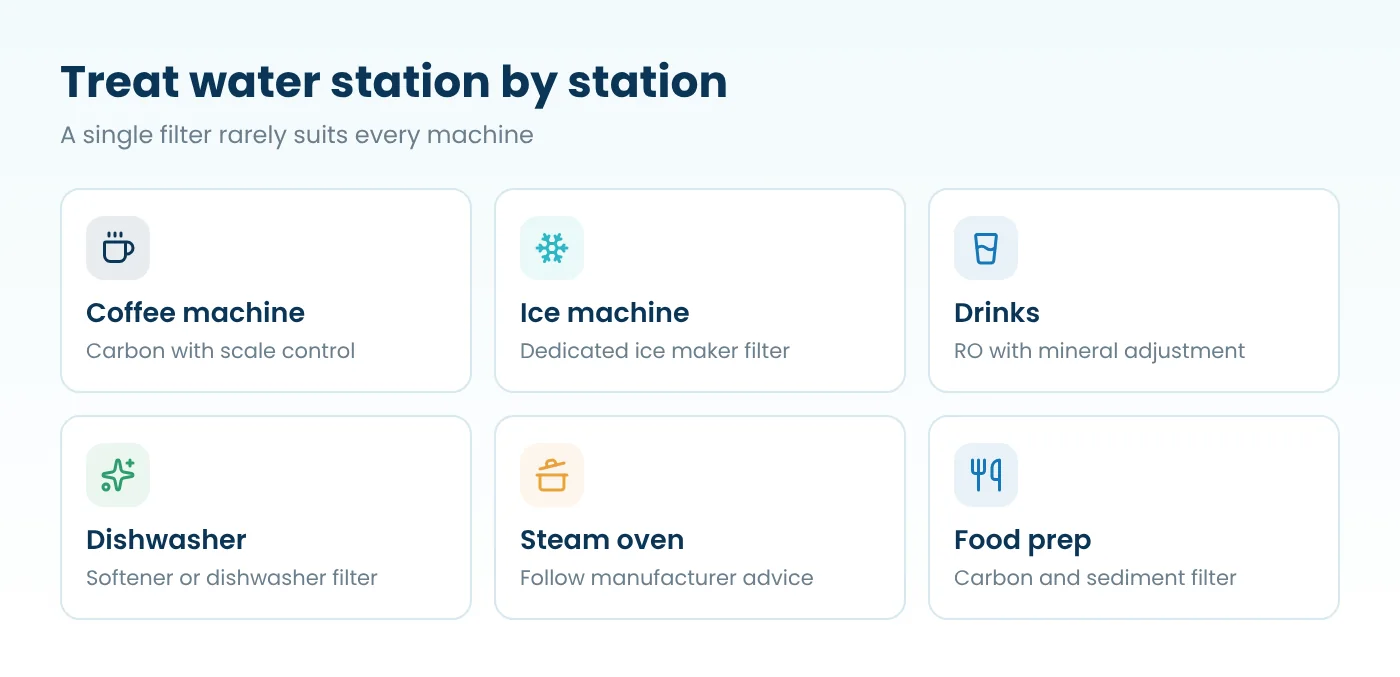
Which filter does each kitchen station need?
Treat water according to its use. A single central filter rarely suits every machine.
| Station | Main problem | Filtration to consider |
|---|---|---|
| Coffee machine | Chlorine taste and scale | Carbon with scale control |
| Ice machine | Odour and sediment | Dedicated ice maker filter |
| Drinking water and beverages | Taste and dissolved solids | RO system with mineral adjustment |
| Dishwasher | Spots and scale | Softener or dishwasher filter |
| Steam oven | Scale | Treatment recommended by the manufacturer |
| Food preparation | Chlorine and sediment | Carbon and sediment filter |
Offices and smaller cafés follow the same logic, usually with less equipment. Browse our commercial water filters for offices and restaurants to see systems designed for this kind of use.
How to fix water problems in a commercial kitchen
- Find the source. Look at every affected point. One faulty machine suggests a local problem, while many suggest a supply problem.
- Check your tank records. Ask your landlord or mall management for the latest cleaning and testing reports.
- Test your water. Use an accredited laboratory for food safety, and a hardness or TDS test for equipment needs.
- Clean and descale equipment. New filters will not remove existing scale or dirty ice bins.
- Install the right filters. Size them by daily throughput, flow rate and machine requirements.
- Train the team. Staff should know how to spot early warnings and who to contact.
How to prevent problems from coming back
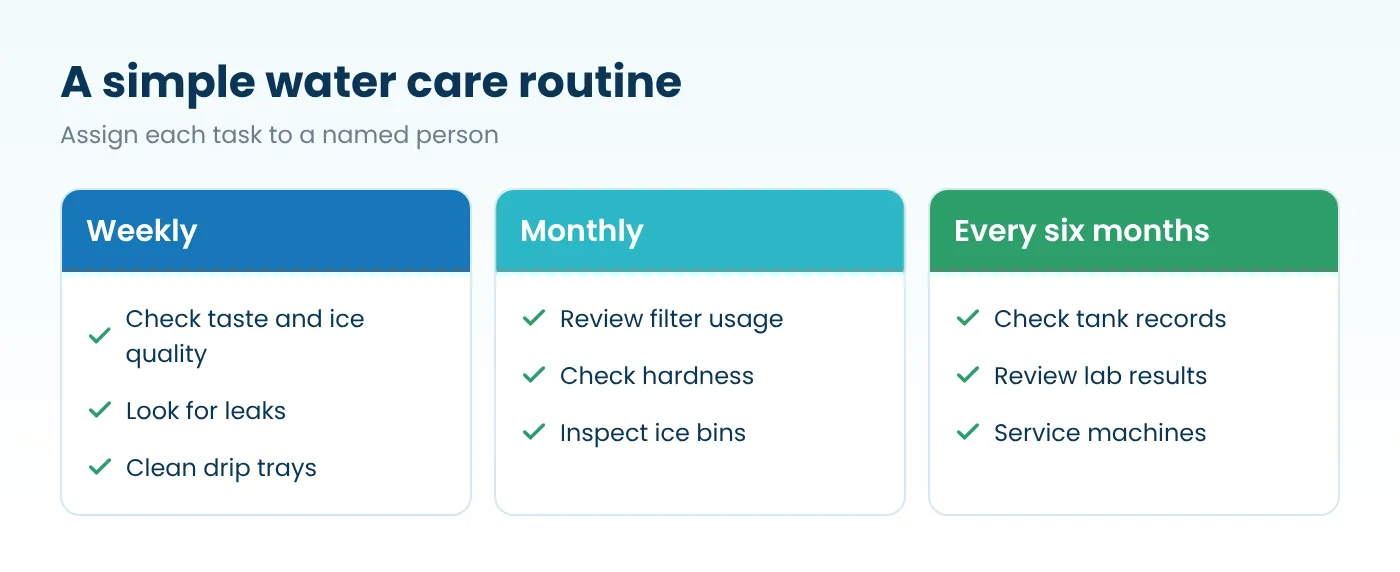
- Log every filter change. Inspectors and service engineers both find a dated record useful.
- Follow a cleaning schedule. Ice machines need routine cleaning and sanitising according to the manufacturer’s instructions.
- Change cartridges by usage. High-volume sites should use litres served, not just the calendar.
- Monitor water hardness. Check it after any plumbing change or when you move premises.
- Flush after closures. Run water through lines after holidays or renovations.
- Service machines on time. Pair water treatment with preventive maintenance.
- Clean your tanks. If you control the storage tanks, follow the tank cleaning schedule recommended for Dubai buildings. If you do not, ask for records.
Tap water, filtered water and customer service
Many UAE restaurants still serve bottled water. Serving tap water is not mandatory in Dubai. In 2019, Dubai Municipality clarified that it can be consumed if tanks and pipes are maintained, cleaned and flushed by an EIAC-approved company and laboratory samples are satisfactory. Some businesses now offer filtered still or sparkling water in reusable bottles, which reduces deliveries, storage space and plastic waste.
If you plan to do this, check current Dubai Municipality requirements, keep your test results and make sure filtered water is handled hygienically. Reusable bottles need proper washing and sanitising like any other food-contact item.
Choosing water filtration for restaurants: what to ask a supplier
- What did your assessment of our site show?
- What throughput is this system designed for?
- Will it meet our equipment warranty conditions?
- Can you provide an installation and maintenance plan?
- How quickly can you supply replacement cartridges?
- Will you keep service records for each visit?
Frequently asked questions
Do restaurants in the UAE need a water filter?
Filtration is often a sensible choice for taste, consistency and equipment protection, but your legal duty is to use potable water. Check with your local authority for rules that apply to your activity and emirate.
How often should restaurant water filters be changed?
It depends on the filter, water quality and volume. Use the manufacturer’s capacity rating, and change the filter earlier if you see a drop in flow or taste.
Is RO water good for coffee?
Pure RO water can taste flat and may not suit some machines. Many cafés blend it or add minerals to reach a target recipe. Follow the coffee machine manufacturer’s water specification.
Can one filter serve the whole kitchen?
A central filter can protect against sediment and chlorine, but ice, coffee and dishwashing often need different treatment.
Better water, fewer problems
Clean, consistent water helps your food and drinks taste as intended, and it keeps expensive equipment running. Begin with an honest look at where your water comes from, then treat each station according to what it needs. A little routine care costs far less than an ice machine failure on a busy Friday night.