
A reverse osmosis purifier is one of the most popular ways to improve drinking water in Dubai homes. When it works well, you hardly think about it. Then one day the tap slows to a trickle, the water tastes odd or the system starts making noise. Most RO system problems have simple causes, and many can be traced to filters that are overdue for a change.
This guide explains how an RO system works, the benefits you should expect from it, why faults occur and how to fix and prevent them. Switch off the water supply and power before touching any part of your system, and follow the manufacturer’s manual.
How a reverse osmosis system works
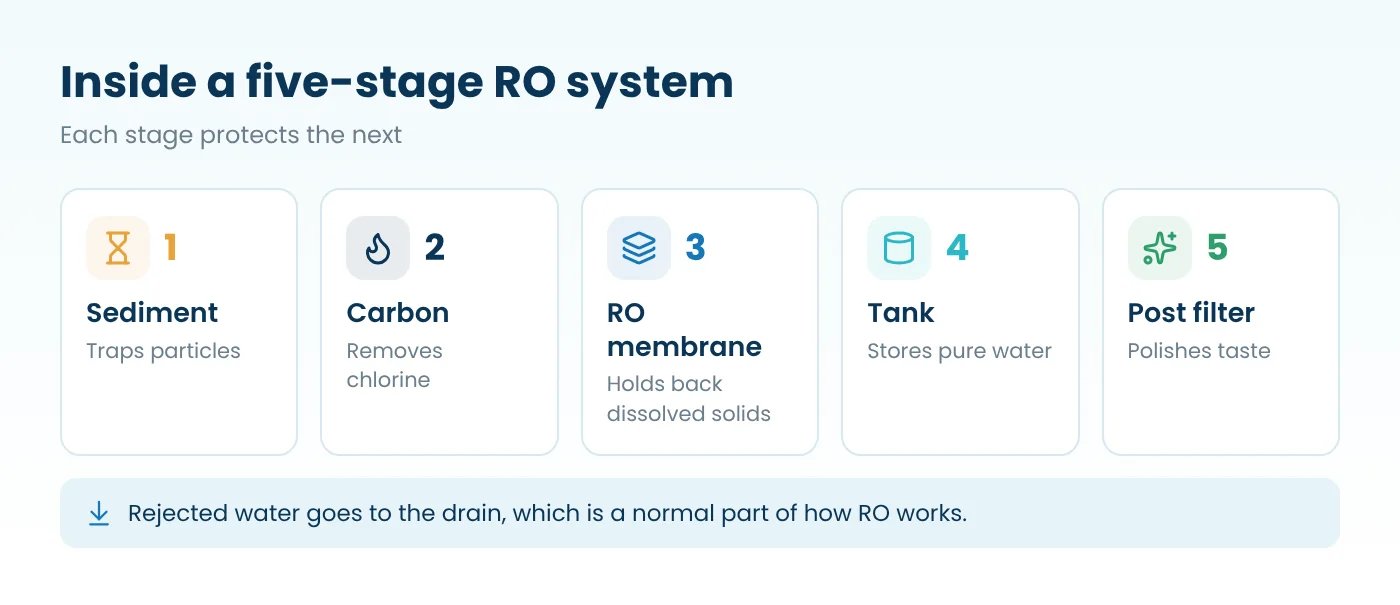
Water passes through several stages, and each one protects the next.
- Sediment filter: traps rust, sand and other particles.
- Carbon pre-filter: removes chlorine, which can damage most RO membranes.
- RO membrane: pressure pushes water through a very fine membrane that holds back most dissolved solids.
- Storage tank: holds purified water until you need it, in systems that have one.
- Post filter: polishes taste as the water leaves the tank. Some systems also add minerals.
The rejected water goes to the drain. This is normal, so a certain amount of waste water does not by itself mean there is a fault.
The real benefits of reverse osmosis water
A healthy system offers several practical benefits:
- A significant reduction in dissolved solids, along with many contaminants
- Better taste, with less chlorine and fewer off-flavours
- Clearer ice, better coffee and less scale in kettles
- Drinking water on tap, with fewer bottles to carry and store
RO water is low in minerals, and desalinated water already starts out with relatively few. Some people prefer a mineral stage for taste. Our guide on how to mineralize reverse osmosis water covers the available options.
Why RO systems are prone to problems in Dubai
Dubai’s conditions place a few specific demands on home RO systems.
- Tank and pipe sediment: dirty storage tanks and older pipes send more particles to your pre-filters.
- Variable pressure: water pressure differs between buildings and floors, and a membrane needs enough pressure to work properly.
- Heat: warm cupboards and warm feed water can encourage bacterial growth in storage tanks and tubing.
- Long gaps in use: water left standing during a summer away can taste stale and encourage growth.
- Missed services: many problems begin when cartridges stay in place far beyond their recommended life.
Common RO system problems and how to fix them
Slow water flow or low pressure
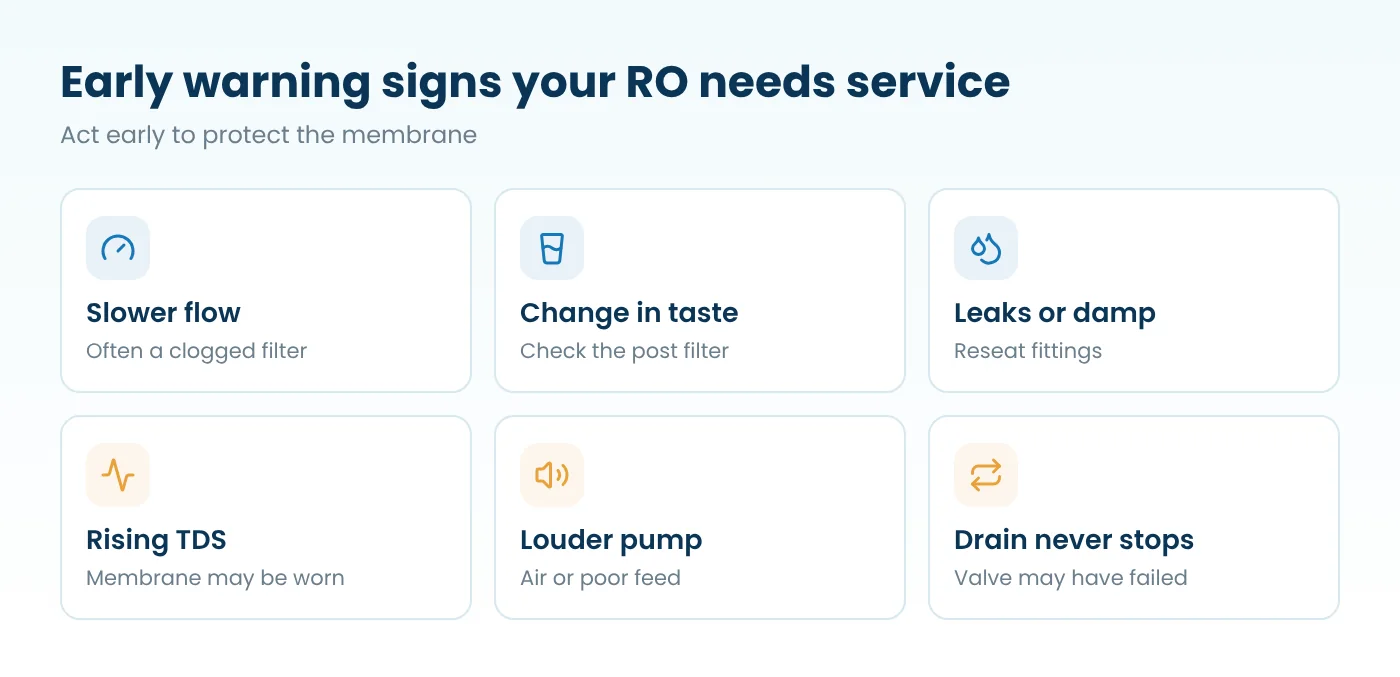
This is the most common complaint. Likely causes include a clogged sediment or carbon filter, low feed pressure, a worn membrane or a storage tank that has lost its air charge.
Fix: replace overdue filters first. Next, check that the feed valve is fully open. On a tank system, empty the tank and check its air pressure, which is commonly around 6 to 8 psi on small domestic tanks, although you should use the figure in your manual. If the building’s pressure is low, a booster pump may be needed.
Bad taste or smell
A plastic, stale or musty taste usually points to an old post filter, stagnant water or bacteria in the tank or tubing. A new system can also taste odd until it has been flushed.
Fix: change the post filter, flush the system and sanitise it during a service. Drain the tank fully when you return from a long trip.
The drain runs constantly
If water keeps flowing to the drain after the tank is full, the shut-off valve or check valve may have failed, or the tank may not be reaching full pressure.
Fix: a technician can test the valves. Avoid leaving this for long, because it wastes water and can increase your bill.
Leaks under the sink
Most leaks come from loose push-fit connections, worn O-rings or housings that were not seated correctly after a filter change.
Fix: turn off the water and dry the area. Then reseat the fitting, or replace the O-ring. Check again after an hour. Under-sink leak trays and detectors are worth considering if the unit sits above a wooden cabinet.
A high TDS reading
If the TDS reading of filtered water has climbed sharply compared with when the system was new, the membrane may be worn or fouled, or a part may be installed incorrectly. Low feed pressure can also push the reading up.
Fix: compare tap water and filtered water with a meter. If rejection has dropped noticeably, replace the membrane, and always replace the pre-filters at the same time.
Noise from the system
A pumped system will hum, but loud rattling can mean air in the lines, a failing pump or a lack of water reaching the pump. Gurgling from the drain line is often harmless, although a kink or poor connection can make it worse.
Fix: check the water supply and bleed air by running the tap. Ask for a service if a pump runs without stopping.
Cloudy or milky water
Tiny air bubbles are common after a filter change and usually clear within a short while.
Fix: let a glass stand for a minute. If it does not clear from the bottom up, flush the system and have it checked.
No water at all
Check whether the feed valve is closed, the power is off, the filters are blocked or the tank valve has been left shut. After a filter change, a tank-based system can take a few hours to refill.
RO problem quick reference
| Problem | Most likely cause | First action |
|---|---|---|
| Slow flow | Clogged filter or low pressure | Replace overdue filters |
| Bad taste | Old post filter or stagnant water | Flush and change the post filter |
| Constant drain | Failed valve | Call a technician |
| Leaks | Loose fitting or worn O-ring | Shut off and reseat |
| High TDS | Worn membrane | Compare readings and replace it |
| Loud pump | Air or poor water feed | Check the feed and bleed air |
How to prevent RO system problems
Good maintenance prevents most faults and protects the membrane, which is usually the most expensive part.
- Replace sediment and carbon filters on time. Every 6 to 12 months is a common range, though use your manufacturer’s schedule.
- Change the membrane when performance falls. Many last around 2 to 3 years, depending on water and use.
- Replace the post filter yearly, or as advised by the manufacturer.
- Keep a service log. Write down the date of each change on a sticker near the unit.
- Check the TDS every few months. A trend is more useful than a single number.
- Sanitise during servicing. This matters most for systems with a storage tank.
- Keep your water tank clean. A cleaner feed means longer filter life.
- Buy compatible parts. Poorly matched cartridges can leak or bypass.
When to repair and when to replace
Repairing an RO system usually makes sense when the fault is a filter, valve, fitting or membrane. Consider a replacement if the unit is very old, its parts are hard to find, it has repeated leaks or the housing is cracked. You may also want to upgrade if your household has grown, or if you want a tankless or hot-and-cold model.
Frequently asked questions
How long should an RO system last?
With regular maintenance, a good system can give many years of service. Cartridges and membranes are consumable parts, so plan for them in your running costs.
Is low TDS always a good sign?
It shows that the membrane is removing dissolved solids. It does not prove the water is free of bacteria, especially if the tank or tubing needs sanitising.
Why does my RO system waste water?
The membrane needs a flow of water to carry rejected solids to the drain. The amount depends on the system, its pressure and whether it has a pump.
Can I change RO filters myself?
Many homeowners can change basic cartridges if the manual allows it. Leave membrane problems, pumps, valves and sanitising to a technician if you are not confident.
Keep your system working as it should
Most RO faults give early warnings, such as slower flow or a change in taste. Acting at that stage is cheaper than replacing a damaged membrane or dealing with a leak. If your system is past its service date or simply too old to repair, you can compare options in our range of home RO purifiers in Dubai.