
Water from the main supply can leave the network in excellent condition and still reach your tap in a poor state. The weak point in most Dubai homes and buildings is the storage tank, where water sits in the heat between the DEWA meter and your taps. Water tank disinfection is the step that deals with this risk, and it only works properly when it is done after a thorough clean.
This guide explains why tanks become contaminated, how to recognise the warning signs, how the professional process works and what you can do to prevent the problem coming back.
Water tank cleaning vs disinfection: what is the difference?
The two terms are often used as if they mean the same thing, but they are separate jobs.
- Cleaning physically removes what you can see: sludge, sediment, rust flakes and the slippery film on the walls.
- Disinfection kills what you cannot see: bacteria and other microorganisms left on the surfaces after cleaning.
The order matters. Chlorine that lands on sludge or biofilm gets used up reacting with that dirt, and microbes sheltering underneath can survive. Pouring disinfectant into a dirty tank is one of the most common mistakes, and it gives a false sense of security. A proper service always combines both stages.
Why water tanks get contaminated in Dubai
DEWA has stated that its potable water meets World Health Organization guidelines up to the meter, and that maintaining the internal network and tanks after the meter is the responsibility of the customer, the owner and their maintenance companies. Most contamination therefore begins inside the property. These are the usual causes.
Heat and slow water turnover
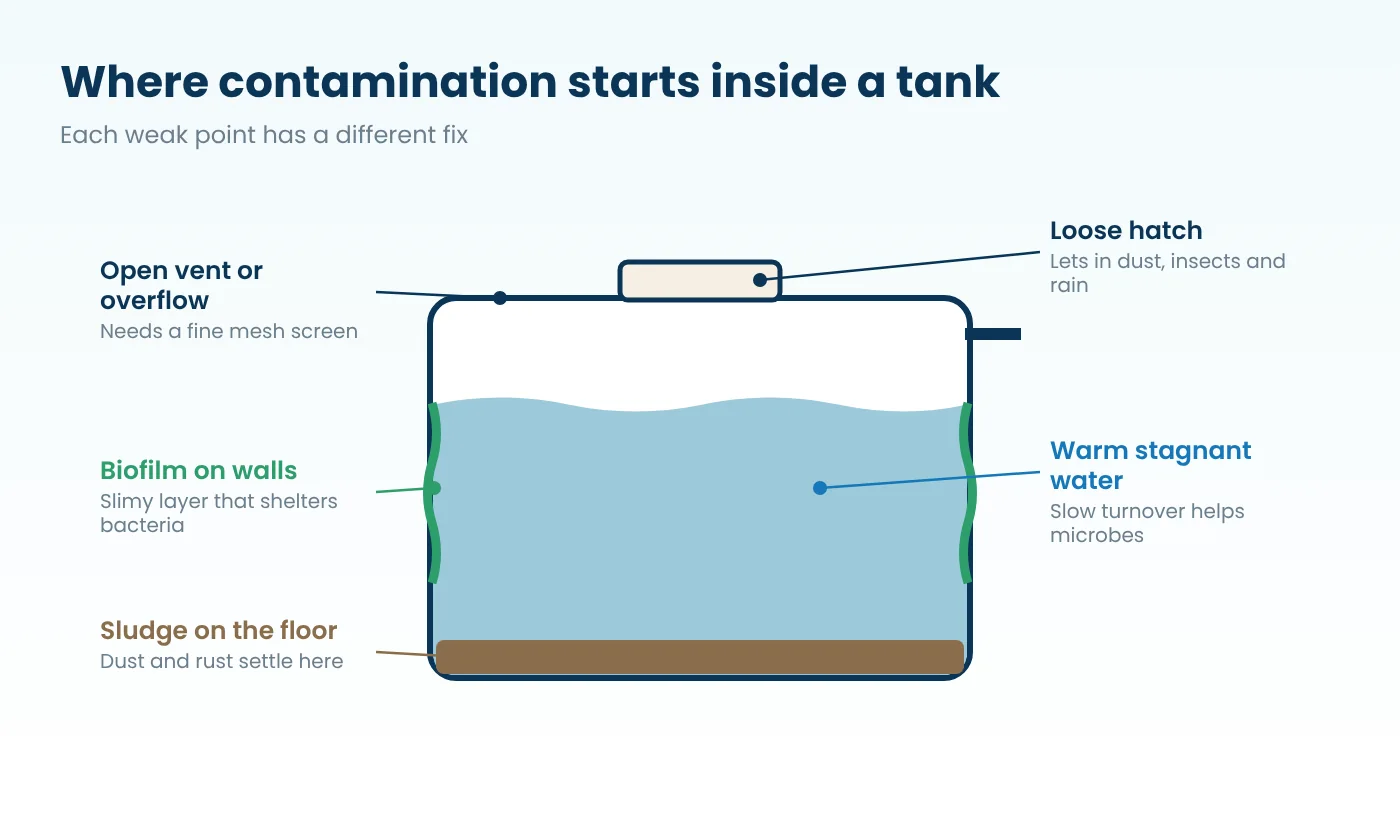
Rooftop tanks sit in intense summer sun, and warm stored water is more hospitable to microbial growth. Any disinfectant left in the supply also fades over time. A tank that is oversized for its household, or a villa left empty for the summer, holds water for longer and makes the problem worse.
Dust and sand entering the tank
Fine desert dust finds its way through loose hatches, unscreened vents and overflow pipes. Once it settles, it forms a layer of sludge. Dubai Municipality lists settled sludge among the conditions that support microbial growth, so a dusty tank is more than a cosmetic issue.
Biofilm on the tank walls
Bacteria attach to internal surfaces and form a thin, slimy layer that protects them. If the walls feel slippery, biofilm is probably present, and only physical scrubbing removes it reliably.
Damaged covers and fittings
A cracked lid, failed seal or missing vent mesh gives insects, birds and rainwater a way in. WHO notes that covering water storage containers can reduce faecal contamination, which is why the condition of the cover deserves as much attention as the water itself.
Rust and ageing tanks
Older metal tanks and fittings corrode, and pipework can add to it. Flakes of rust then feed the sediment layer and discolour the water.
Long gaps between services
Sediment and biofilm build up gradually, so nothing seems wrong until the water changes. By then, the tank has usually needed attention for months.
Warning signs your tank needs attention
Book an inspection if you notice any of the following:
- Brown, yellow or cloudy water, especially first thing in the morning
- A musty, earthy or rotten-egg smell from the tap
- A change in taste
- Visible particles in a white bucket or glass of water
- Filter cartridges clogging much sooner than usual
- Algae or mould around the hatch
- Tank not cleaned in the last six months, or no record of when it was
Remember that the absence of these signs does not prove a tank is safe. Bacteria produce no colour or smell at the levels that matter, so routine care should follow the calendar and not your senses.
How often should a tank be disinfected in Dubai?
Published summaries of Dubai Municipality’s Technical Guidelines for Quality of Unbottled Drinking Water (2024) state that tanks should be emptied, cleaned and disinfected at least twice a year. The Municipality’s Safe Water for a Healthy Community initiative gives the same six-month advice. For a more detailed schedule by property type, read our guide on how frequently water tanks should be cleaned.
You should also arrange a service outside the routine schedule in these situations:
- After moving into a property with no maintenance records
- After a tank has stood unused for more than a month
- After a flood, a leak or any suspected contamination
- After repairs that involved opening the tank
How professional water tank disinfection works
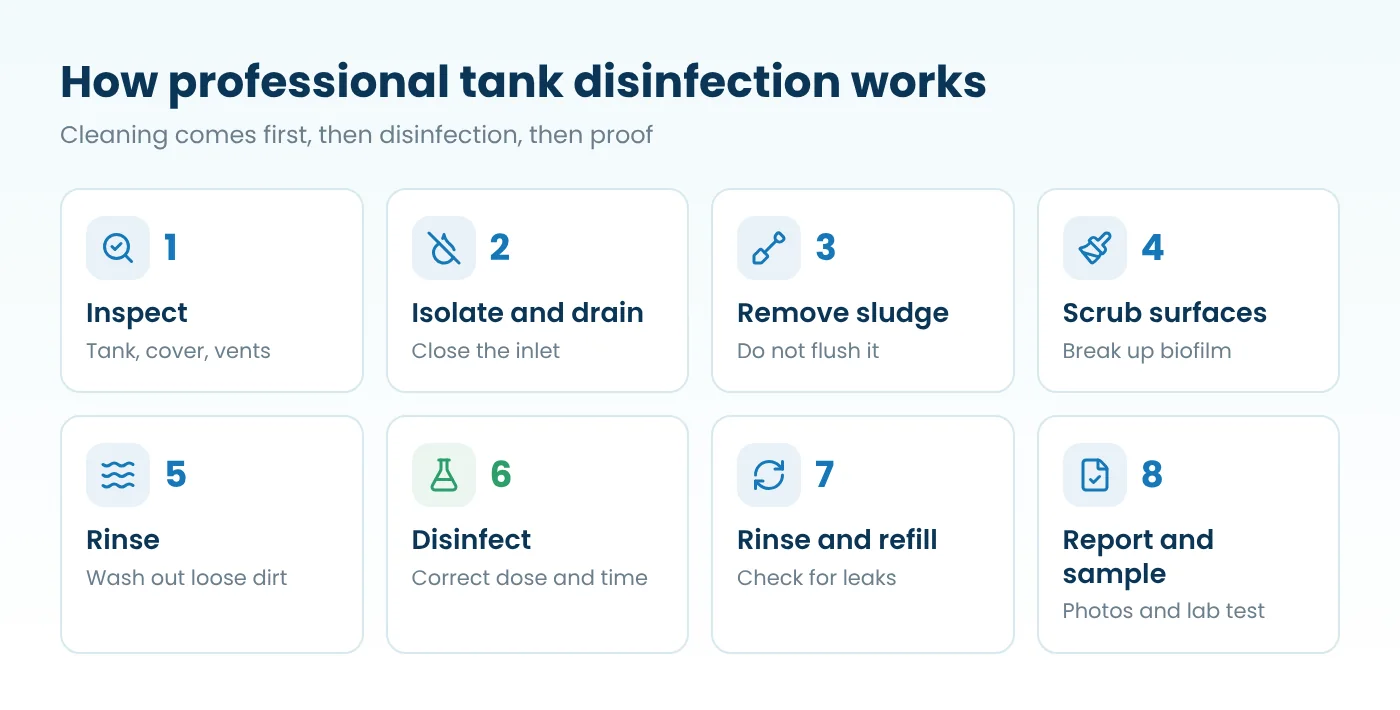
The exact method depends on the tank, but a good service follows this sequence.
- Inspect. The team checks the tank, cover, vents, overflow and fittings before work starts.
- Isolate and drain. The inlet is closed and the tank is emptied. Occupants should be told in advance.
- Remove sludge. Sediment is taken out instead of being flushed down into your pipes.
- Scrub the surfaces. Walls, floor and ceiling are cleaned to break up biofilm.
- Rinse. Loosened dirt is washed out.
- Disinfect. An approved disinfectant is applied to all internal surfaces for the required contact time. Dubai’s guideline is reported to specify chlorine at 50 mg/L for this stage, and technicians control the dose and timing.
- Rinse and refill. Disinfectant residue is removed, and the tank is refilled and checked for leaks.
- Report and sample. You receive a written report, ideally with before and after photos. A sample should then be tested by an EIAC-accredited laboratory about a week later.
Can you disinfect a water tank yourself?
For most properties in Dubai, this is a job for professionals. Working inside a tank means working in a confined space, and it carries real risks from poor ventilation and from concentrated chlorine, which can be dangerous when handled incorrectly. An incorrect dose can leave water unsafe or unpleasant to use.
Dubai’s rules also favour professional work: tank cleaning should be carried out by a company approved by Dubai Municipality. What you can safely do yourself is look, record and report. Check the hatch and vents, take note of any change in the water and call a specialist if something looks wrong.
How to choose a water tank cleaning company
Before you book, ask each provider:
- Are you approved by Dubai Municipality for this work, and does the approval match your trade licence?
- Which disinfectant do you use, and at what strength?
- Will you remove the sludge, or only flush the tank?
- Will I get a written report with photos?
- Do you arrange laboratory testing, and is it included in the price?
Keep every report. Municipality inspectors can ask to see tank maintenance records, and they are useful if you are selling or letting a property.
What does it cost, and who pays?
Advertised prices in Dubai usually start from around AED 499 for small residential tanks, while larger rooftop or underground tanks often cost AED 700 to AED 1,200 or more. Tank size, access, sludge levels and lab testing all change the final quote, so check whether VAT is included.
Responsibility depends on the property. Villa owners arrange their own cleaning. In a rented villa, the landlord generally handles maintenance unless the contract says otherwise. In apartment buildings, shared tanks are common areas maintained by building management. If in doubt, confirm it in writing before you sign your lease.
How to prevent contamination between services
- Inspect the cover monthly. It should be intact, fixed in place and sealed.
- Screen vents and overflows. Fine mesh keeps out insects and dust.
- Shade or insulate rooftop tanks. Cooler water is easier to keep in good condition.
- Keep water moving. Avoid long periods of stagnation, and arrange a clean before moving back into a property left empty.
- Set a six-monthly reminder. Booking two fixed dates a year is simpler than remembering.
- Replace ageing tanks and fittings. Corroded parts will keep shedding rust however often you clean.
- Add filtration at the point of use. A filter improves the water you drink, but it works alongside tank care and does not replace it.
Frequently asked questions
How long does water tank disinfection take?
Many residential tanks can be done in a few hours, including draining and refilling. Large commercial tanks take longer and need planning around water use.
Can I use the water straight after disinfection?
Use it once the tank has been rinsed, refilled and cleared by the technician. If you notice a strong chlorine smell, run the taps and speak to the company.
Does boiling water make a dirty tank safe?
Boiling can kill many microorganisms in the water you boil, but it does nothing for sediment, rust or the condition of the tank. Treat it as a short-term measure.
Is tank disinfection mandatory in Dubai?
Dubai Municipality’s guidance calls for routine cleaning and disinfection, and owners or their representatives are responsible for following it. Check current requirements with the Municipality if you manage a commercial or shared property.
Protect the water you store
A clean, sealed and regularly disinfected tank removes the most common cause of poor tap water in Dubai. If your tank is overdue, or you are unsure when it was last serviced, our team can inspect it and give you a clear quote. Learn more about our water tank cleaning service in Dubai.